
Before you put that gold under glass | Mine Letter

MINE LETTER / NOVEMBER 17, 2026
The best side of a gold nugget isn't always the side that sits flat.
A piece might catch your eye because of its outline, a small pocket or a branching edge. Set it down in the easiest position, and that detail can disappear from view. Finding the right angle is part of the pleasure of collecting natural gold.
A good display starts with three simple choices: the detail you want to show, a support that holds the piece securely, and enough room to take it out for another look. Here is a practical way to put those choices together.
Find the detail you want to show
Start with the product photographs or, if you already own the piece, study it while it rests securely in its tray. Look at the outline, the surface and the spaces between raised areas. Which view made you stop and look?
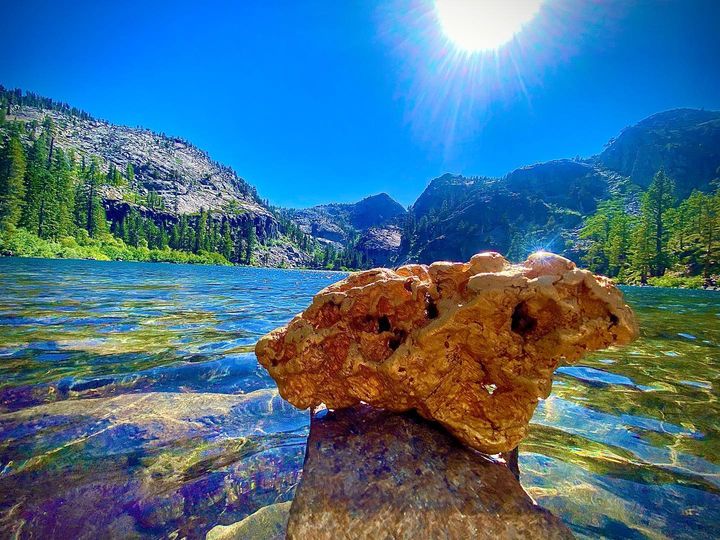
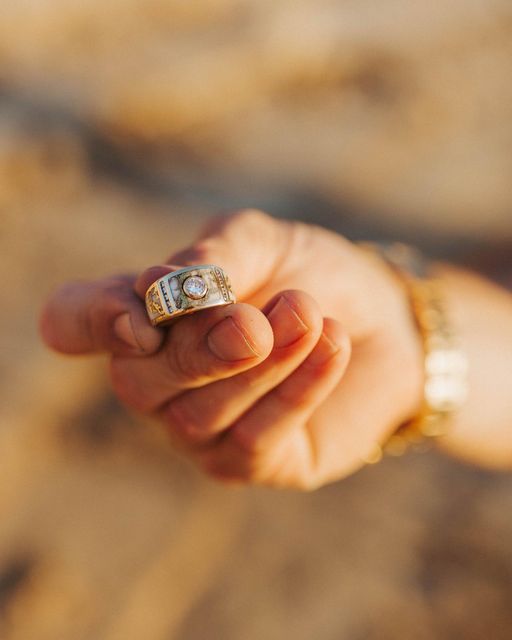
Our 1.06-gram Atlin specimen, L-11, is a useful example. It is listed as dendritic gold, a term for a branching form, from Atlin, British Columbia. Compare the close-up with the photograph beside a quarter. One lets you study the detail; the other shows how small the piece actually is.
That comparison helps you plan a display. For a small specimen, we would give the outline some clear space around it and keep a large label or stand from crowding the view. Before buying a mount, ask the seller which position lets that particular piece rest securely.


Choose the support before the case
Once you know the view you like, work out what will hold the gold in that position. Then choose a case with room for both the piece and its support.
The Canadian Conservation Institute recommends padded supports, materials that will not snag and separation between mineral specimens. For gold with delicate edges, the support should carry the weight beneath a substantial part of the piece. Read CCI's collection-care guidance.
Before ordering a case, check:
- The base: Can the specimen rest steadily, with support beneath a substantial part of it?
- The clearance: Will the lid and sides stay clear of every projecting part?
- The access: Can you remove the supported piece without pinching a thin tip or scraping it against the case?
A compact nugget and a thin, branching specimen may need different supports. For an upright display that needs a custom mount, have a mineral preparator or conservator assess the piece.
Check what touches the gold
The material inside the case matters as much as the case itself. Smooth, conservation-grade padding is a better starting point than loose cotton, which can catch on projections. Ask a collection-care supplier about a suitable support for the specimen's shape.
Mounting putty can make it easy to hold a piece at an appealing angle. The question to ask before using it is equally practical: how will it come off?
CCI identifies sticking, residue and damage during removal as possible problems with adhesive putties and similar products. For a piece with small hollows or thin edges, we would favor a fitted support that avoids adhesive directly on the gold. CCI's guide to display and storage materials explains the tradeoffs.
If your specimen already has a mount, keep any instructions that came with it. Ask what was used before attempting removal, and get advice if it resists. The goal is to keep the details you enjoy intact.
Give the label a place, too
With the gold settled, add the few facts that help you appreciate it: what it is, where it came from and which piece it is in your collection.
For L-11, a simple display card could read:
Natural gold / L-11
Atlin, British Columbia
1.06 g total specimen weight
Keep the fuller record separately: seller, purchase date, original description, any supporting documents and photographs of the accessible sides. Use the same specimen number on the display card and in your records so they stay connected. The Cobb County Gem and Mineral Society's collection guide offers a useful starting system.
Record the location as specifically as the evidence allows. A regional label belongs in the record; a creek or mine name belongs there when you have documentation for it.
Now step back and look at the whole display. Can you see the feature that first caught your attention? Does the label help you understand the piece? Can you take it out safely when you want a closer look?
That is a display worth coming back to: the gold has room to be seen, and its story stays with it.
This week's gold notes
Alongside this week's collecting guide, here are two brief updates from the wider gold world.
Yukon: a week for the mining community
The Yukon Chamber of Mines listed the Yukon Placer Forum for November 15 at the Gold Rush Inn in Whitehorse, followed by its November 16-19 Geoscience Forum & Trade Show. The latter's program includes technical talks, posters and drill-core displays. If Yukon gold is part of your collection, the event program offers a starting point for learning about the region's geology and mining work.
Gold market: last 7 days, November 10-17, 2026
Over the last seven days, the London morning gold benchmark moved from $4,073.70 to $3,854.25 per troy ounce, a decline of $219.45, or 5.39%.
| Observation | USD per troy ounce |
|---|---|
| November 10, 2026 | $4,073.70 |
| November 17, 2026 | $3,854.25 |
Updated November 17, 2026. Both observations use the LBMA Gold Price AM, from auctions beginning at 10:30 a.m. London time (GMT, 4:30 a.m. Central). This is a seven-day comparison of matching morning benchmarks. Sources: Westmetall's daily series and LBMA's benchmark timing.
Reuters reported on November 17 that a firm U.S. dollar, rising Treasury yields and expectations of further Federal Reserve rate increases were putting pressure on gold. Traders were also awaiting the Fed's October meeting minutes, due November 18, for more detail on the interest-rate outlook.
For natural gold collectors, the market quote is one part of a price comparison. A specimen also has its own form, condition and documented origin. Its total weight can include other metals or attached minerals, so total grams should not be treated as pure-gold content.
Sources and notes
- Canadian Conservation Institute, Caring for natural history collections, and Technical Bulletin 32 (2017). General collection-care guidance, checked November 17, 2026; a specific mount for L-11 has not been assessed.
- Wayne Dodd and Tom Toothman, Cobb County Gem and Mineral Society, Cataloguing your Mineral Collection, undated; checked November 17, 2026.
- Yukon Chamber of Mines, November 15-19, 2026 event listings, checked November 17. The program establishes scheduled subjects, not reported outcomes.
- Seven-day market comparison: November 10 to November 17, 2026, using matching LBMA Gold Price AM observations. Reuters commentary: November 17. Links appear with the market note.
- Nuggets by Grant, L-11 listing and original photographs; in stock when checked November 17, 2026.